
The Tatmeen Project, launched by the Ministry of Health and Prevention (MOHAP) in the UAE, aims to strengthen and safeguard the nation’s healthcare supply chain through end-to-end visibility and control. By implementing GS1 serialization standards, Tatmeen ensures every pharmaceutical product can be tracked and verified at each stage-from manufacturer to pharmacy to patient.
This initiative establishes the UAE as a regional leader in pharmaceutical safety and regulatory innovation. Using Tatmeen UAE compliance software such as FactsTT, pharmaceutical companies can achieve full compliance while streamlining operations and reducing the risk of counterfeit drugs.
Why Tatmeen Matters for the Pharmaceutical Industry
The primary goals of Tatmeen are to:
Protect public health and ensure medicine authenticity.
Increase transparency across the supply chain.
Build a sustainable and reliable healthcare distribution network.
To achieve these, Tatmeen uses digital track-and-trace technologies integrated with GS1 serialisation, B2B data exchange, and API integration. Every registered stakeholder-manufacturers, importers, distributors, and healthcare providers-must implement Tatmeen integration software capable of managing this data accurately.
How the UAE Tatmeen System Works
The UAE Tatmeen system for pharmaceuticals relies on serialization and barcode scanning at every step of the supply chain. Each medicine pack is assigned a unique GS1-128 or Data Matrix barcode, which stores product details like batch number, expiration date, and serial number. These codes are scanned at customs, warehouses, hospitals, and pharmacies to ensure authenticity.
MOHAP’s centralized platform collects these scan events through Tatmeen API integration, enabling real-time tracking, recall management, and compliance reporting.
Core GS1 Elements in Tatmeen Compliance
Let’s break down the key components of GS1 standards that power Tatmeen compliance.
Serialization
Serialization assigns a unique serial number to each saleable unit of a pharmaceutical product. This number, linked to the Global Trade Item Number (GTIN), ensures every package can be identified and verified. Serialization is a critical part of Tatmeen pharmaceutical software UAE as it supports anti-counterfeiting measures and product traceability.
GS1-128 barcode
The GS1-128 barcode encodes essential data such as GTIN, batch/lot number, expiration date, and serial number. It’s highly flexible and widely used in Tatmeen serialization solutions in the UAE to ensure every scan provides meaningful and structured information.
Global Trade Item Number (GTIN)
A GTIN is the globally recognized identifier for products. It distinguishes every pharmaceutical product across packaging levels—from individual packs to cartons and pallets. Proper GTIN assignment is mandatory for companies implementing Tatmeen compliance software.
Global Location Number (GLN)
A GLN identifies physical and legal entities in the supply chain—manufacturers, warehouses, distributors, or healthcare facilities. Every participant in the UAE Tatmeen network must have a GLN to exchange traceability data accurately.
Serial Number
Each GTIN is paired with a unique serial number that cannot be reused for the same product. This combination (GTIN + Serial) creates the foundation of track and trace functionality within Tatmeen.
GS1 Application Identifier (AI)
It is the set of two or more numbers that, when placed at the start of an element string, specifically determine its format and meaning.
Batch No/ Lot Number
The batch or lot number contains manufacturing and traceability details. It’s critical for recall processes and quality control, both of which are managed efficiently through ERP for pharmaceuticals integrated with Tatmeen.
Expiry Date
The expiry date ensures only safe and effective products are dispensed. Tatmeen software automatically validates and alerts users when products approach expiration.
Aggregation
Aggregation defines the relationship between items, cases, and pallets. It enables hierarchical tracking (child-parent relationships) and simplifies warehouse operations. Tatmeen GS1 serialization software UAE automates this process with barcode scanning and digital records.
Serial Shipping Container Code (SSCC)
The SSCC identifies logistic units like pallets or cases for shipping and storage. It plays a crucial role in Tatmeen regulation software UAE, ensuring that every movement of goods is traceable across the distribution chain.

The GS1 DataMatrix’s preferred encoding order for application identifiers is shown in the above picture.
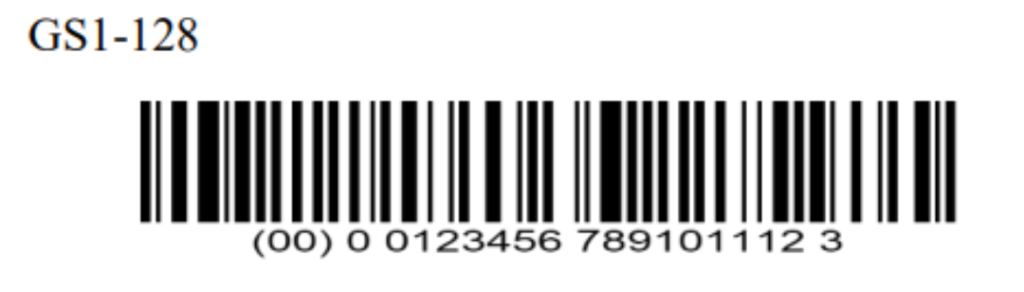
An example of an SSCC on a logistical unit that is aggregated and barcoded with a GS1-128 barcode.
Role of ERP for Pharmaceuticals in Tatmeen Compliance
To manage all these GS1 identifiers and Tatmeen reporting requirements, businesses need an integrated ERP for pharmaceuticals. That’s where FactsTT come in.
FactsTT acts as your central system of record, managing inventory, manufacturing, and compliance data and handles barcode scanning, aggregation, and B2B API integration with MOHAP’s Tatmeen platform.
Together, they form a complete Tatmeen integration software solution-automating data flow, ensuring GS1 accuracy, and simplifying onboarding for manufacturers, distributors, and healthcare providers
Conclusion
As of December 13, 2022, all participants in the UAE’s pharmaceutical supply chain are required to have a GLN and comply with Tatmeen standards. Understanding GS1 elements like GTIN, GLN, SSCC, and serialization is essential for compliance and efficiency.
FACTS Computer Software House helps pharmaceutical businesses across the UAE stay compliant with Tatmeen through customized ERP for pharmaceuticals, Tatmeen track & trace software, and complete Tatmeen API integration support.