Introduction
Dubai has become a leading business hub for companies across trading, manufacturing, construction, retail, logistics, healthcare, and professional services. As businesses grow, managing daily operations using spreadsheets and disconnected software can become increasingly difficult. This is where ERP Dubai solutions can make a significant difference.
ERP software integrates essential business functions into one centralized system, helping companies improve efficiency, maintain accurate records, and make better business decisions.
What Is ERP Software?
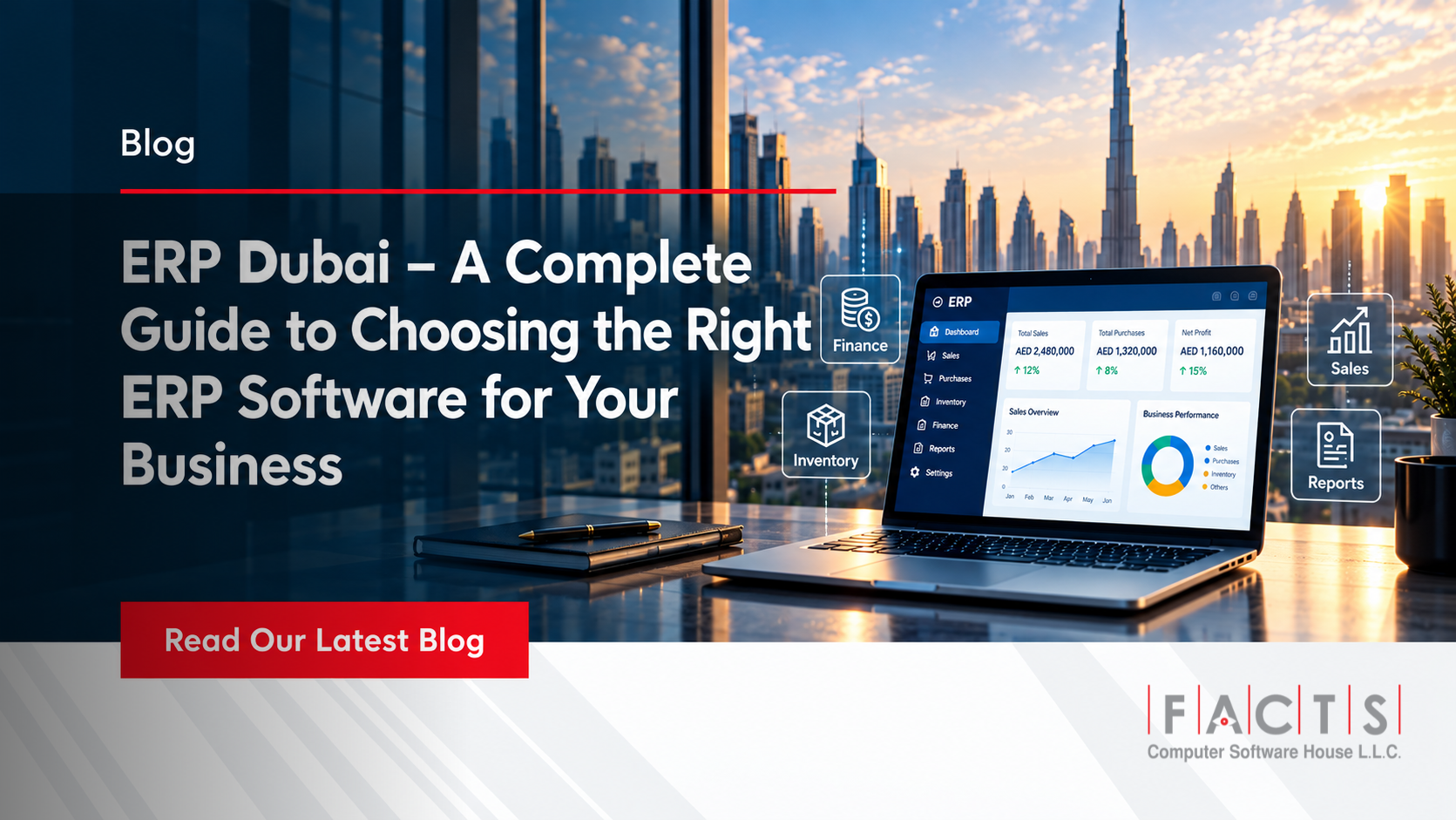
ERP software is a business management system that connects different departments through a shared platform. Instead of maintaining separate systems for accounting, inventory, sales, purchasing, and human resources, companies can manage these activities using integrated software.
A typical ERP system may include:
- Financial management and accounting
- Inventory and warehouse management
- Sales and customer relationship management
- Procurement and supplier management
- Human resources and payroll
- Reporting and business analytics
For companies operating in Dubai, an integrated system can help improve coordination between departments and provide greater visibility into business performance.
Why Do Businesses in Dubai Need ERP Solutions?
Dubai’s competitive business environment requires organizations to operate efficiently while managing costs, customer expectations, and regulatory responsibilities.
An ERP system can help businesses:
- Improve operational efficiency: Automate repetitive tasks and reduce manual data entry.
- Increase financial visibility: Monitor expenses, revenue, receivables, and cash flow through consolidated reports.
- Manage inventory effectively: Track stock levels, product movements, and warehouse activities.
- Support business growth: Add users, locations, warehouses, or business units as operations expand.
- Improve decision-making: Access timely information through dashboards and reports.
How to Choose the Best ERP Dubai Solution
Selecting the right ERP system starts with understanding your company’s needs.
Consider these factors before making a decision:
- Business requirements: Identify the processes that need automation.
- Industry suitability: Choose a solution that supports your industry’s workflows.
- Customization: Determine whether the software can accommodate your specific requirements.
- Integration: Check compatibility with existing applications and third-party systems.
- Scalability: Ensure the ERP can support future growth.
- Implementation support: Evaluate training, technical assistance, and ongoing maintenance.
- Total cost of ownership: Consider licensing, implementation, migration, customization, and support costs.
Cloud ERP vs On-Premise ERP
Cloud ERP is hosted by a service provider and accessed online, while On-Premise ERP is deployed on infrastructure managed by the organization.
Cloud ERP can offer easier remote access and reduced infrastructure management. On-premise ERP may provide more direct control over hosting and technical configurations. The right choice depends on security requirements, internal IT capabilities, budget, and operational needs.
Conclusion
Choosing the right ERP Dubai solution can help businesses connect their departments, streamline operations, and establish a stronger foundation for growth. By evaluating business requirements, implementation support, and long-term costs, companies can select an ERP system that aligns with their goals.
Looking for ERP software in Dubai? Contact a qualified ERP provider to discuss your business requirements and explore a solution tailored to your organization.